
THE PREPARED CITIZENS REPORT
By Joe — The Idaho Prepper
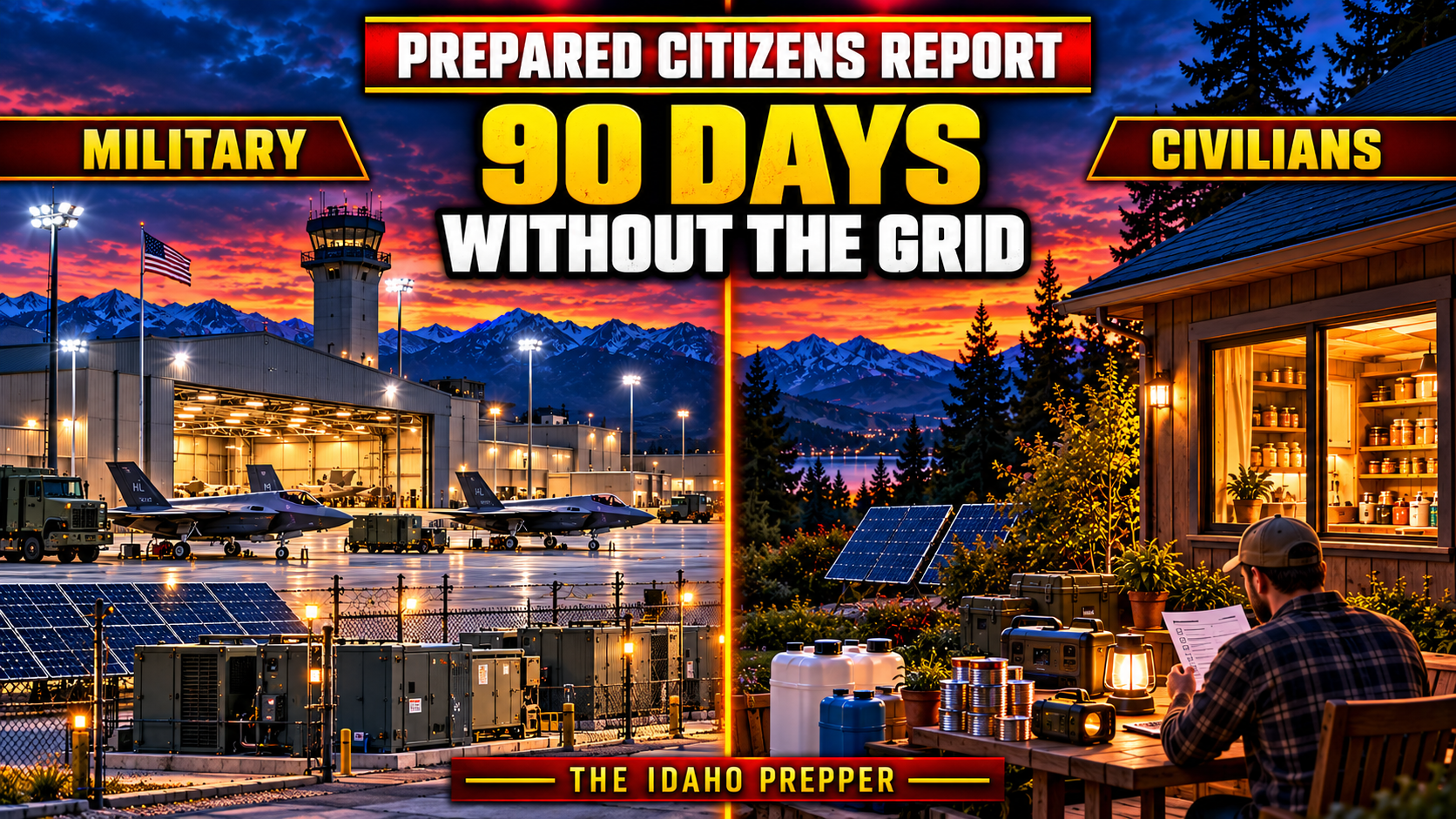
The Pentagon is taking steps to reduce the military’s dependence on the civilian electrical grid and outside supply chains.
I believe that should get our attention.
If military planners are preparing to keep essential operations running through a prolonged disruption, everyday Americans should be asking a similar question:
How long could our households function if the grid and the services we depend on became unavailable?
What the Pentagon announced
During his September 30 address at Quantico, Pete Hegseth introduced FORTRESS America. The official Army/Pentagon account, published October 2, describes an initiative to make military installations more independent of civilian power and supply chains while strengthening protection against disruptions.
DefenseScoop’s October 7 reporting describes the program office and its work on energy independence, supply resilience, reserves, and installation protection.
Air & Space Forces Magazine’s October 20 coverage explains that energy assessments, microgrids, and battery backup are early priorities, with implementation details still being developed.
This is a planning objective. It does not mean every installation already has that capability, or that a nationwide outage is imminent.
But it does show that dependence on outside infrastructure is being treated as a vulnerability worth addressing.

Why I think civilians should take this seriously
Military installations and families have different responsibilities and resources. But both depend on electricity, water, transportation, communications, and dependable supplies.
When electricity disappears, the consequences can extend far beyond a dark living room.
Your well pump may stop. Heating equipment may need power even when fuel is available. Refrigeration becomes a concern. Phones need charging. Obtaining water, information, fuel, and supplies can become more complicated.
My position is that families should work toward their own 90-day preparedness capability.
That is my recommendation—not a Pentagon instruction for households. It means taking a serious look at what your family needs, identifying the weak points, and steadily reducing your dependence on services you cannot control.
You do not need to predict the next emergency to make useful preparations.
Efficiency helps—but backup capability matters
Using less electricity makes limited backup power last longer. LED lighting and prioritizing essential devices are sensible improvements.
But energy efficiency alone does not answer the grid-down question.
A charged battery eventually needs recharging. A generator needs fuel and maintenance. Solar equipment needs compatible components and suitable conditions. A well pump needs the correct voltage and sufficient starting capacity.
Owning backup equipment is the beginning. Knowing what it can power—and for how long—is the capability.
Write down your essential loads. Test the equipment safely. Record actual runtime. Then decide how you would replenish that energy during an extended interruption.
What does 90 days mean for your household?

Water: Build an initial reserve and a credible safe-resupply plan. The CDC recommends starting with at least one gallon per person daily for three days and building toward two weeks if possible. At that same rate, five people would need 450 gallons over 90 days, before additional needs. That makes storage, transport, sourcing, and suitable treatment important considerations. Read the CDC guidance.
Food: Count familiar meal portions. Include dietary needs and pets, and account for the water and fuel required to prepare your food. Keep some meals that require no cooking.
Power and warmth: Prioritize essential devices and safe heating arrangements. Here in North Idaho, a winter plan must address what happens when the house cannot remain safely warm.
Sanitation: Plan how you will manage toilets, handwashing, dishes, and waste when normal services are interrupted.
Health: Discuss prescription continuity, medication storage, and powered medical equipment with the appropriate providers.
Communications and transportation: Keep a radio, paper contacts, charging supplies, a family check-in plan, and a realistic way to relocate.
A 90-day plan includes knowing when staying home is no longer the right decision.
Prepare safely
Portable generators belong outdoors, at least 20 feet from the home and openings, with exhaust directed away. Use working carbon-monoxide alarms. Never use a grill or outdoor cooking appliance indoors, and have an electrician arrange any connection to household wiring.
See CDC power-outage safety and DOE-supported generator guidance.
Start building your plan this week
- ☐ Count household members, pets, and needs that cannot be interrupted.
- ☐ Inventory water, food, lighting, communications, and first-aid supplies.
- ☐ List essential powered equipment and test compatible backup runtime.
- ☐ Calculate consumption and identify realistic resupply options.
- ☐ Set an affordable purchasing and rotation plan.
- ☐ Choose early relocation triggers and an accessible destination.
- ☐ Practice a short, safe outage exercise and correct what is missing.
Start with three days, build toward two weeks, then examine the gaps at 30, 60, and 90 days. These are practical milestones—not a demand to buy everything at once.
Download your free companion checklist
90-Day Grid-Down Household Readiness Checklist — PDF
Seven printable pages with 128 individual items and capabilities, Have/Need columns, planning notes, and household calculation worksheets.
Gear to Consider for Your Household Plan
If you’re working through the checklist, these shopping links connect to the power, transportation, water, and food-storage parts of the plan. Start with your household’s needs, budget, and equipment you already own.
Affiliate disclosure: Some links below are affiliate links. If you purchase through them, I may earn a commission at no additional cost to you. As an Amazon Associate I earn from qualifying purchases.
- Backup power — EcoFlow power stations and solar-generator options. Compare battery capacity, output, and compatible solar charging against your essential loads and tested runtime. A long-outage plan also needs a realistic way to recharge. Watch my EcoFlow review.
- Alternative transportation — Birch e-bikes. An e-bike may fit local travel needs if it suits your terrain and mobility. Include charging, maintenance, and route planning when considering one for emergency use. Watch my Birch Grolar review.
- Water storage — AquaBrick water-storage containers. Consider container size, the weight you can comfortably move, dispensing arrangements, and available storage space. Follow the manufacturer’s cleaning and storage instructions, and keep your safe-resupply plan alongside your stored reserve.
- Pantry organization — Wallaby Mylar bags and oxygen absorbers. Consider packaging supplies as part of a food-storage and rotation plan. Match the packaging method to the food and follow appropriate food-storage instructions.
You can also browse Gear Reviews & Deals for related videos and partner links. Check current retailer specifications, availability, and terms before purchasing.
FORTRESS America asks how essential military functions can continue when outside support is disrupted.
I think American families should ask that question too—and begin putting workable answers in place.
Stay prepared,
Joe — The Idaho Prepper
Prepare Today. Survive Tomorrow.
Leave a Reply